

💥 War, Iran, and Oil (and what happens next)
The Iran War Just Got Worse. Here's What To Do Now.

In 1973, Arab oil producers slapped an embargo on the West. By the time it was over, oil prices had quadrupled. The stock market cratered, and the word “stagflation” entered every investor’s vocabulary.
Fast forward to this past Saturday. The U.S. and Israel launched Operation Epic Fury. Iran’s Supreme Leader is dead. The Strait of Hormuz—the world’s most important oil chokepoint—is effectively closed. It feels like we’re watching a history documentary in real-time.
But here’s the thing most people get wrong: panicking is the only guaranteed way to lose money.
The question isn’t “Is this 1973 all over again?” The question is, “What do I do with my money right now?”
Warren Buffett always says to be greedy when others are fearful. Right now, Wall Street is terrified. The conflict in the Middle East has closed the Strait of Hormuz. Oil prices are spiking. Tech stocks are bleeding out. People are running for the exits. But if you listened to me a few weeks ago, you already knew this was coming.
Panic creates the greatest wealth building opportunities in history. While everyone else is selling in fear, we are going to use this chaos to buy amazing assets at a massive discount.
In this issue, we’ll connect the dots on the economy and markets to help you get smarter with your money.
📬 Here’s what’s in today’s issue:
Part I - Markets:
1. Market Update + Analysis
2. Important Finance News
3. Chart of the DayPart II - Investing:
4. Insider Trades
5. Top Stocks Right Now
6. Today’s Trade
7. Fear & Greed Analysis
8. Technical AnalysisPart III - Actionable Advice:
9. Important Lessons & Advice
10. Final Thoughts
11. Questions from Subscribers
This newsletter takes a couple hours to research and write so please help us and:
Hit the LIKE button❤️ on this post and share this newsletter with friends or family
🙏Become a paid subscriber to support our writing & research! (Get a free 30-day trial with this link) (learn about the benefits here):
(1) Market Update + Analysis
📈 Everything Important You Need to Know (in 30 seconds):
Markets tumbled this week as the US-Israel conflict with Iran escalated, sending oil prices surging and stoking inflation fears.The Dow Jones Industrial Average dropped ~400 points on Tuesday while the S&P 500 and Nasdaq fell ~1%.
This past Saturday, the U.S. and Israel launched Operation Epic Fury, killing Iranian Supreme Leader Khamenei and roughly 40 top officials. The conflict is now in its fourth day, with Trump warning it could last 4-5 weeks or longer.
Oil prices spiked nearly 10% after Iran blockaded the Strait of Hormuz, a critical chokepoint for 20% of the world’s oil supply.
Nvidia crushed earnings expectations with a record ~$68 billion in sales, but the stock still fell ~6% as investors panic over an artificial intelligence bubble.
International markets hit fresh all-time highs. Japan's Nikkei was up 14% YTD, Korea's KOSPI surged 44% YTD, and Europe's Stoxx 600, UK's FTSE 100, and Canada's TSX all hit fresh ATHs last week.
Mortgage rates fell below 6% for the first time since 2022, hitting 5.98%.
💡 Andrew’s Analysis (how this impacts YOU):
Most investors weren’t prepared for this. And that’s the whole problem.
Early Saturday morning, the U.S. and Israel launched Operation Epic Fury, a joint military strike on Iran targeting hundreds of sites. By Sunday, Supreme Leader Ayatollah Ali Khamenei — Iran’s ruler since 1989 — was confirmed dead. By Tuesday, the Dow had swung 1,200 points intraday, oil was racing toward $85 per barrel, and markets from New York to Seoul were rattled.
The single most important variable to watch right now is oil. Not earnings. Not the Fed. Oil. When I worked at Goldman, the lesson was always the same: follow the commodity, find the crisis. Right now, oil is that crisis.
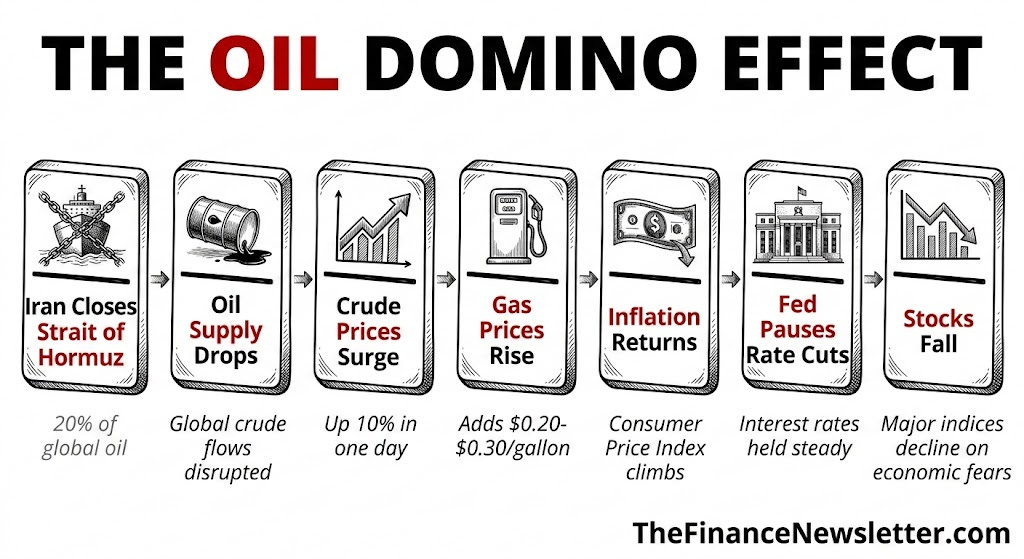
Here’s the chain reaction you need to understand. The Strait of Hormuz handles about 20% of the world’s daily oil supply. Iran has effectively closed it. Tanker traffic fell from 16 million barrels per day to just 4 million in a single Saturday. If it stays closed, oil breaks $100. If oil breaks $100, inflation surges. If inflation surges, the Fed freezes rate cuts. And when rate cut hopes die, stocks fall.
This is the exact script that played out in 2022 when Russia invaded Ukraine. Oil spiked, inflation followed, the Fed hiked rates 11 times, and the S&P 500 fell nearly 20%. The same screenplay could play out again, potentially with more force. OPEC+ tried to calm markets by raising output 220,000 barrels per day — but those shipments still travel through the same blocked strait. It’s like adding more water to a pipe you’ve already clogged.
Meanwhile, Nvidia reported the most impressive earnings in corporate history last week and the stock still fell 5.5%. Revenue up 73%, net income of $43 billion, guidance that destroyed expectations. When perfect isn’t enough, that’s not a stock problem. That’s a sentiment problem. And a Citrini Research AI doomsday post with 20 million social media views in a single day sent IBM down 13%, its worst drop in 25 years. That kind of reaction doesn’t happen in a calm, rational market. It happens in a scared one.
But here’s what I’ve learned in 20 years in finance during the market’s worst moments: geopolitical shocks almost never have a lasting impact on stocks. Barclays data shows the S&P 500 is flat the day after a shock and typically steadies within weeks. Steve Eisman, who famously shorted the housing market before 2008, said this week that if the conflict resolves, “two months from now, prices will be back to where they were.”
The key word is if.
A short, decisive conflict is manageable. A prolonged 5-week war that keeps the Strait of Hormuz blocked is a completely different story. Trump has said the operation could last 4 to 5 weeks or far longer. That’s the one variable every investor needs to track.
My advice:
Oil below $90: Stay the course. History says markets bounce fast from geopolitical shocks.
Oil breaks $100: Trim travel and consumer discretionary. Add energy and defense.
Oil approaches $120+: This becomes a 2022-style inflation shock. Shift to commodities, gold, and short-duration bonds.
All of this week’s biggest stories connect to each other through one common theme. The Iran war drives oil. Oil drives inflation. Inflation drives Fed policy. Fed policy drives stocks. And while U.S. markets absorb all of this chaos, international markets are hitting all-time highs. Korea is up 44% this year. Japan is up 14%. Europe keeps setting records. The world is not standing still, and neither should your portfolio.
Don’t panic. But don’t be passive either. The investors who won in 2022’s chaos weren’t the ones who froze. They were the ones with a game plan ready before the storm.
👉 For daily insights, follow me on X /Twitter; Instagram Threads; Facebook; or BlueSky, and turn on notifications!
(2) Important Finance News
📬 In today’s issue we analyze:
1) What the Iran War Means for You.
2) Jamie Dimon Sees 2008 Repeat.
3) The Century-Old Hedge That's Outperforming Everything.
4) The "HALO" Trade: Wall Street's New Obsession.
5) Investors Are Fleeing US Stocks for International Markets.
6) Wall Street Loves AI, GDP Doesn’t.
🤔 But first, what’s your biggest concern this week?
1️⃣ What the Iran War Means for You.
The U.S. and Israel launched Operation Epic Fury, targeting hundreds of military and government sites across Iran. By Sunday, Supreme Leader Ayatollah Ali Khamenei was confirmed dead. By Tuesday, oil was racing toward $85 per barrel, the Dow had swung 1,200 points intraday, and markets across three continents were in full sell-off mode.
The Strait of Hormuz is the most important chokepoint in the world right now. About 20% of the world’s daily oil supply flows through this narrow waterway off Iran’s coast. Iran has effectively closed it. Insurance companies are refusing to cover ships attempting the route. Tanker traffic collapsed from 16 million barrels per day to just 4 million in a single day. Saudi Aramco paused operations at one of the world’s largest refineries after a nearby drone strike. QatarEnergy stopped LNG production after Iranian attacks on two critical facilities.
Bloomberg reported this week that a prolonged closure could push oil into triple-digit territory. JP Morgan’s Natasha Kaneva put a $120 worst-case scenario on the table. And gas prices already jumped 11 cents overnight to $3.11 per gallon, per AAA. Every $10 jump in crude adds 20 to 30 cents at the pump within weeks. A $120 oil scenario gets Americans back to the $5-a-gallon pain of 2022.
What makes this conflict more dangerous than previous Middle East flare-ups is scale and duration. Tina Fordham of Fordham Global Foresight noted this week that this conflict is “considerably higher risk” than the U.S. attacks on Iran’s nuclear facilities in June 2025, which “had little discernible impact on markets.” This one already has. Trump has said the operation could last 4 to 5 weeks or longer. The longer it runs, the higher the oil stays, and the more pressure builds on the Fed to pause rate cuts.
Here’s the truth: geopolitical shocks almost never have a lasting impact on equities. Since 1980, Barclays data shows the S&P 500 typically steadies within weeks of a shock. But duration is the variable.
2️⃣ Jamie Dimon Sees 2008 Repeat.
Jamie Dimon, CEO of JPMorgan and (the head of the world’s largest bank), told investors at an event that the current financial environment reminds him of the lead-up to the 2008 financial crisis.
Dimon doesn’t raise alarms casually. In my 10+ years working on Wall Street, I always watched how CEOs at the top of the financial system talk in public versus how they talk in private. When someone like Dimon says this publicly, what he’s saying privately is likely far more urgent.
His specific concern is the private credit market. Private credit lends money to businesses that can’t qualify for traditional bank loans. It’s growing fast, it’s less regulated, and it’s less transparent. When JPMorgan took a $170 million hit after auto lender Tricolor Holdings collapsed last fall, Dimon called it one “cockroach” — and where there’s one cockroach, there are usually more.
But his warning goes further. “Crisis can strike in surprising industries,” Dimon said. “You didn’t expect utilities and phone companies in ‘08 and ‘09. This time around, it might be software, because of AI.” That’s a remarkable statement from the most powerful banker in the world. He’s not just warning about credit. He’s warning about AI-driven disruption creating unexpected casualties in sectors that look safe today.
The pattern here is familiar to anyone who lived through 2007 and 2008. High asset prices make investors complacent. Complacency creates reckless lending. Reckless lending finds its way into surprising corners of the economy. And then, the cockroaches arrive.
My advice: audit your exposure to interest-rate-sensitive and highly leveraged positions. Build a cash buffer. The time to prepare is before the crisis, not during it. Dimon has been right about big-picture financial risk more times than most. His anxiety being “high” right now should register on yours too.
3️⃣ The Century-Old Hedge That’s Outperforming Everything.
The Energy Select Sector SPDR ETF $XLE is up 20.6% year-to-date while the SPDR S&P 500 ETF Trust $SPY is flat and the Invesco QQQ Trust $QQQ has dipped into the red on the year. If you listened when I said months ago that energy was the most underappreciated portfolio hedge heading into 2026, this week proved it in real time.
This isn’t luck. Energy has spent a century moving differently from the broader market. When geopolitical stress threatens oil supplies, energy stocks profit from the same rising prices that hurt everything else. That counterbalance is exactly why energy belongs in every serious portfolio — not just for growth, but for protection.
The historical case is powerful. From 1969 to 1984, the S&P 500 gained just 8% after inflation while energy stocks rose 50%. In 2022, a traditional 60/40 portfolio fell 17% — but adding a 20% energy allocation would have roughly broken even. Energy doesn’t just make you money during crises. It can save your portfolio from a crisis.
The current Iran standoff is already lifting oil prices as traders factor in the Strait of Hormuz risk. U.S.-based producers — Exxon Mobil $XOM, Chevron $CVX, and Occidental Petroleum $OXY — are the direct beneficiaries. They produce outside the conflict zone but sell into a market where Middle East supply is constrained. That’s a powerful combination.
My advice: a 10% to 20% allocation to energy has historically reduced portfolio volatility during geopolitical shocks while capturing the upside when oil runs. You don’t need to predict whether the war escalates or resolves. You just need to make sure your portfolio isn’t “overweight peace” when the world clearly isn’t.
4️⃣ The “HALO” Trade: Wall Street’s New Obsession.
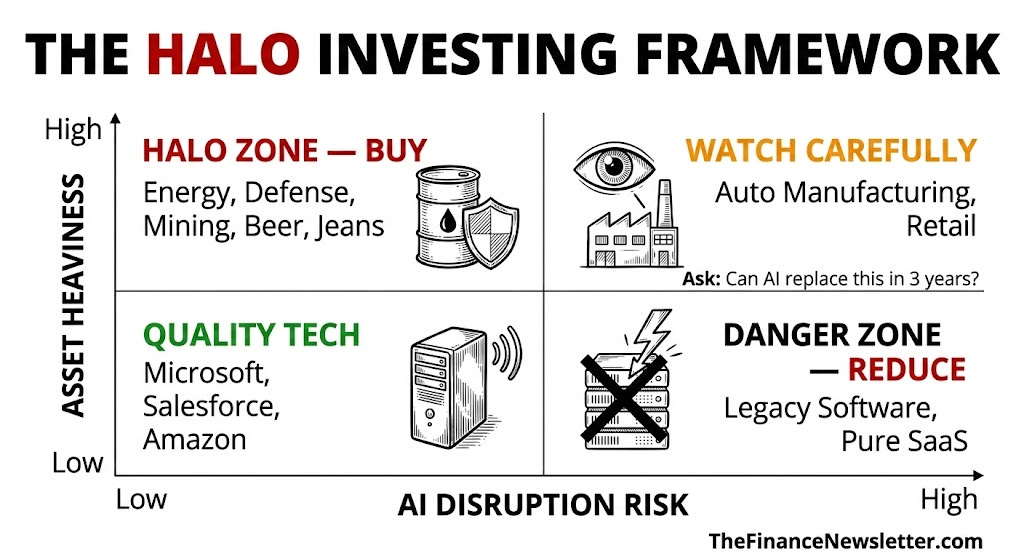
A new investment framework is reshaping how Wall Street thinks about money. It’s called HALO — Heavy Assets, Low Obsolescence — coined this month by Josh Brown, CEO of Ritholtz Wealth Management. And this week’s market action made the case for it better than any analyst note could.
The premise is simple. In a world where an AI tool can wipe out an entire business model overnight, the safest investments are companies that AI literally cannot replace. You can’t prompt-engineer a beer. You can’t use ChatGPT to fly a plane from New York to London. You can’t replace a coal mine with a large language model. These are HALO businesses, and they’re the new safety stocks.
Look at last week’s evidence. IBM fell 13% after Anthropic announced Claude can modernize legacy code. A speculative essay sent DoorDash down 6.6% without a single piece of real news about DoorDash. AppLovin dropped 9%. The S&P Software Index is down roughly 20% this month alone. Meanwhile, Budweiser stock is up 48% from last year. The S&P Global Mining Index is up more than 100% from last year. Kontoor Brands (Wrangler and Lee jeans) jumped 21% this week on solid earnings. That’s the HALO trade in action.
Here’s the nuance though. The HALO trade, like all investment themes, carries risk. Consumer staples are now trading at higher price-to-earnings ratios than the tech sector — a rare inversion that’s happened only three times in seven years, and each time it has coincided with a broader market downturn. When low-growth companies become overvalued due to a trend rather than fundamentals, that’s a warning sign.
Morgan Stanley pushed back this week, arguing that many “AI-disrupted” stocks are undervalued and that companies like Microsoft, Salesforce, Citigroup, and Amazon will actually benefit from AI rather than be destroyed by it. They made a fair point. The nuance isn’t “all tech is dead.” It’s “the market is repricing for a world where not every software subscription survives forever.”
The framework: use HALO as a diversifier, not a total replacement for quality tech. For every position you own, ask one question: “Can an AI meaningfully replace this business within 3 years?” If the answer is yes, consider trimming. If the answer is clearly no, consider adding.
5️⃣ Investors Are Fleeing US Stocks for International Markets.
Bank of America reported that investors are moving from U.S. equities into emerging markets at the fastest rate in five years. And the numbers tell the whole story.
This year is shaping up to be the worst year for U.S. stock performance relative to international stocks since 1995. U.S. investors have pulled roughly $52 billion from domestic equity funds since January while adding $26 billion to emerging markets. And international markets aren’t just keeping up — they’re winning by a wide margin.
South Korea’s KOSPI surged 44% this year to hit a fresh all-time high. Korea even overtook France as the world’s ninth-largest stock market amid a $2.2 trillion rally. Japan’s Nikkei hit a fresh ATH with gains past 13% YTD. Europe’s Stoxx 600 hit a fresh ATH after its eighth straight month of gains — its best win streak since 2013. The UK’s FTSE 100 hit an ATH. Canada’s TSX hit an ATH. The MSCI EM Latin America Index rose 20%, its best start since 1991. BlackRock’s iShares Latin America 40 ETF $ILF pulled in over $1 billion during January alone.
Here’s what most American investors miss. The rest of the world has been quietly building one of the most powerful bull markets in decades, and the average U.S. investor has essentially zero exposure to it. A weaker dollar gives foreign markets a currency tailwind. AI bubble concerns are pushing capital out of the U.S. And many international markets are at earlier stages of their economic cycles, with more growth runway ahead.
The bull case is compelling. Vanguard’s 2026 outlook projects 4.9% to 6.9% annual returns for international stocks over the next decade, versus just 4% to 5% for U.S. equities. If you’re 100% in U.S. stocks, you may be leaving a decade of better returns on the table. Simple starting points: $VEA (Vanguard Developed Markets), $VWO (Vanguard Emerging Markets), $EWZ (Brazil), $EWY (South Korea). Don’t wait until international stocks become the obvious trade. By then, it’s too late.
6️⃣ Wall Street Loves AI, GDP Doesn’t.
Goldman Sachs Chief Economist Jan Hatzius made a statement that should stop every AI investor cold. Despite tech giants spending hundreds of billions on AI last year, Hatzius said the technology contributed “basically zero” to U.S. GDP growth in 2025.
This is a bombshell. The entire narrative propping up AI stock valuations — that massive AI spending is powering American economic growth — just got punctured by the most respected bank on Wall Street.
The key reason it didn’t show up in GDP: most of the chips and hardware powering AI are imported. When U.S. companies spend billions on Nvidia chips built in Taiwan and Samsung memory produced in South Korea, those dollars flow overseas. Hatzius was direct: “A lot of the AI investment that we’re seeing in the U.S. adds to Taiwanese GDP and it adds to Korean GDP but not really that much to U.S. GDP.”
This is one of the most important investing insights of the year. If AI spending isn’t generating measurable domestic economic growth, then the premise behind many AI valuations — that this spending will translate into real earnings growth and productivity gains — is still unproven. The money is being spent. The returns just aren’t arriving yet.
A recent survey of nearly 6,000 executives across the U.S., Europe, and Australia found that despite 70% of firms using AI, about 80% reported no meaningful impact on employment or productivity. The tools are deployed. The results aren’t showing up.
Does this mean AI is a scam? No. It means we’re likely in the “overbuilding” phase that happens with every transformative technology. The railroad boom of the 1800s saw billions poured into infrastructure before the profits materialized — years later. The internet bubble burst before Amazon, Google, and Netflix became generational wealth creators. AI’s profits are coming. They might just be further out than current stock prices assume.
The question for investors isn’t whether AI will matter. It absolutely will. The question is whether today’s prices already reflect a future that’s still 5 to 10 years away. For many AI-exposed names, the answer might be yes. That’s where the risk lives.
💡 Andrew’s Analysis (what this all means):
All six stories this week connect through a single theme. Certainty is being repriced.
The Iran war reprices energy and inflation risk. Jamie Dimon reprices credit market risk. Energy stocks reprice geopolitical protection value. The HALO trade reprices AI disruption risk. International stocks reprice U.S. market dominance. And Goldman’s GDP finding reprices the AI growth narrative. Markets thrived for years on the assumption that oil stays cheap, AI transforms everything fast, and the U.S. always wins. That consensus is cracking — fast. The smartest move right now is to diversify, stay liquid, and build a portfolio designed for a more uncertain world, not the comfortable one we had last year.
👉 For daily insights, follow me on X/ Twitter, Instagram Threads, or BlueSky, and turn on notifications!
(3) Chart of the Day
Pending Home Sales Hit a Record Low
💡 Andrew’s Analysis (why this is important):
The chart tells a story every real estate and stock market investor needs to see clearly.
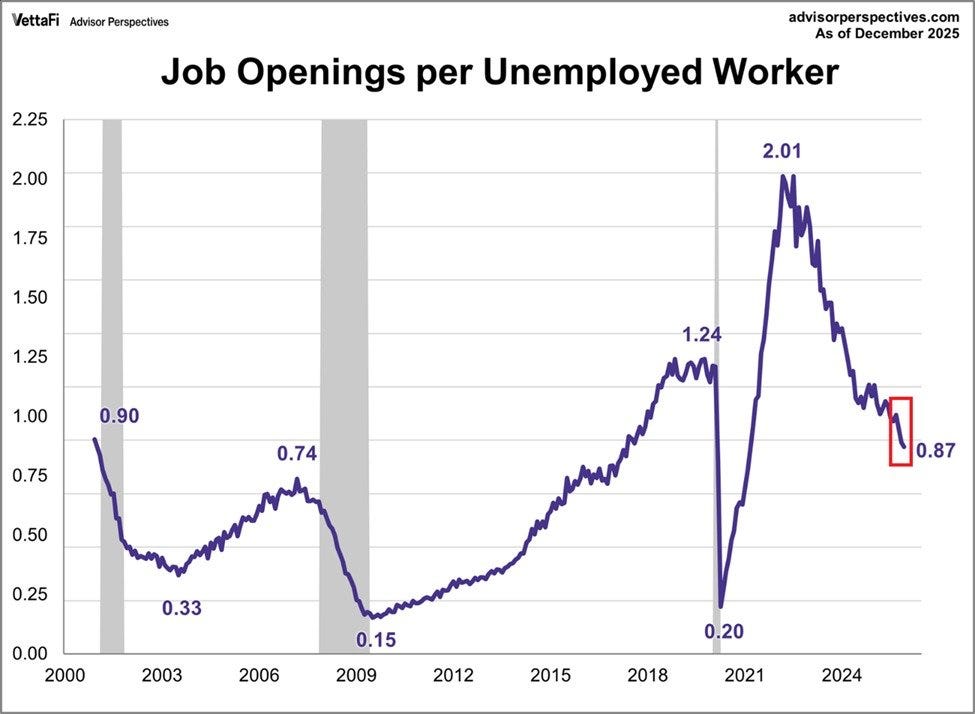
Pending Home Sales just fell to the lowest level ever recorded, according to data from the National Association of Realtors. The chart spans from 2011 to 2026, and it tells one of the most dramatic “boom, bust, and freeze” stories in modern economic history.
From 2011 through early 2020, Pending Home Sales held steady in a healthy range of roughly 85 to 115. Normal. Active. Functional. Then COVID hit in March 2020, and sales plunged briefly to about 70 before exploding into the most aggressive housing buying frenzy in decades, peaking near 130 by mid-2021. That was the mania phase: 3% mortgage rates, pandemic FOMO, remote workers flooding suburbs and Sun Belt cities, and buyers waiving inspections to win bidding wars.
Since that peak, the collapse has been as dramatic as the rise. From the 2022 high of around 120, Pending Home Sales have fallen in a near-straight line to today’s record-low reading, now touching the cyan baseline at approximately 70 — a level that was previously the absolute floor. We’re now sitting on it, or below it. This is not a cooling housing market. This is a frozen one.
What created this freeze? A perfect storm. Mortgage rates went from 3% in 2021 to over 7% by early 2025, nearly doubling the monthly cost of homeownership on the same priced home. Sellers who locked in 3% rates during the pandemic have zero incentive to sell and give up that rate — a phenomenon economists call the “lock-in effect,” and it has strangled supply. And home prices, despite the demand collapse, remain near record highs in many markets, creating an affordability crisis that shuts out buyers even when they want in.
Here’s the long-term significance that most people miss. When Pending Home Sales hits record lows, it doesn’t just reflect a weak housing market. It reflects a broken transaction system. Fewer sales mean less commission income for real estate agents, fewer mortgage originations for banks, less spending on furniture, appliances, and moving services. The housing market is one of the most powerful engines in the U.S. economy. When it freezes, the ripple effects are wide.
Now add this week’s big news: mortgage rates fell below 6% for the first time since 2022, hitting 5.98%, per Freddie Mac. The Mortgage Bankers Association reported that refinancing applications are already up 130% compared to February 2025. That’s a real catalyst — lower rates do pull buyers off the fence.
But here’s the honest reality check. Rates at 6% are still double what they were at the pandemic peak. The buyer who could afford a $400,000 home at 3% now needs to afford it at 6% — and that monthly payment is hundreds of dollars higher. The pool of qualified buyers at today’s prices and today’s rates is far smaller than it was in 2021. And about 2.1% of U.S. homeowners with mortgages were underwater by the end of 2025, the highest rate since 2018 and a 60% jump from the start of 2025. Sun Belt markets — especially parts of Texas and Florida — that went insane during the pandemic now have some of the highest rates of underwater mortgages in the country.
The hottest markets right now tell the real story. The two hottest U.S. housing markets last month were Kenosha, Wisconsin, and Hartford, Connecticut — not Miami, not Austin, not Phoenix. The pandemic boom cities are now the correction cities, and the overlooked Midwest and Northeast markets are the new hot spots.
What to do with this information:
If you’re a buyer, rates below 6% are a real window. Get pre-approved now. The Iran war’s potential to reignite inflation could close that window fast. Don’t wait for 5% rates that may never arrive in 2026.
If you’re a seller, a thaw is coming, but don’t expect 2021 prices. The conditions that created those prices — 3% rates and pandemic FOMO — are gone.
Final thought: this chart is a picture of a housing market at a historic turning point. Lower rates are a meaningful positive catalyst. But we’re still at record-low transaction levels, and the Iran war could slam the rate window shut before it fully opens.
This newsletter takes a few hours to research and write so please help us and:
Hit the LIKE button on this post and share this newsletter with friends or family
Become a paid subscriber to support our writing & research! (Get a free 30-day trial with this link) (learn about the benefits here):
(Your job can pay for this newsletter with its employee development budget — Send this email template to your manager)
(4) Insider Trades from Billionaires, Politicians, and CEOs:
When people with deep knowledge, such as politicians who set policy, executives who run the company, or legendary investors, put their own money on the line, pay attention.
1. CVR Energy ($CVI)
Billionaire Carl Icahn is betting big on the energy crisis. He bought shares on Feb 24th, filing a trade worth over $5.8 million. He also bought earlier in the week, investing over $5 million more on Feb 23rd and Feb 20th.
Icahn is a legendary activist. He doesn't buy growth stories. He buys value. CVR Energy is a petroleum refiner. Refiners win when oil prices are volatile. Icahn is positioning for high inflation and continued chaos in the Middle East. He is betting the "War Economy" is here to stay.
2. Cleo Fields (Democrat, Louisiana, House of Representatives)
Congressman Cleo Fields made unspecified purchases of three tech stocks between February 2-25, 2026. The transactions included Alphabet Inc (Google’s parent company), Meta Platforms Inc, and Micron Technology Inc. Each trade fell in the $100,000-$250,000 range.
Fields sits on the House Financial Services Committee, giving him insight into regulatory matters affecting these companies. His purchases of Google, Meta, and Micron suggest he sees value in Big Tech names despite recent volatility.
As a Democrat on a key financial oversight committee, Fields has visibility into both tech policy and financial regulation. His purchases come at a time when AI stocks are under pressure but semiconductor demand remains strong.
3. Sofi Technologies Inc ($SOFI)
CEO Anthony Noto purchased $1 million worth of Sofi shares on March 2, 2026. This is a significant insider purchase by a CEO who now owns over 11.6 million shares. Sofi is a financial technology company offering personal loans, student loans, and banking services.
Noto’s purchase signals confidence in Sofi’s turnaround efforts. The company has been working to improve profitability after years of losses. With interest rates potentially falling, fintech lenders could see improved economics.
4. ServiceNow Inc ($NOW)
CEO William McDermott purchased $3 million worth of ServiceNow shares on February 27, 2026. ServiceNow provides cloud-based workflow automation software for enterprises.
McDermott’s purchase comes despite AI concerns hammering software stocks. ServiceNow has been integrating AI into its platform, and the CEO’s significant purchase suggests he believes the company is well-positioned to weather the AI disruption storm.
👉 For daily insights, follow me on X /Twitter; Instagram Threads; Facebook; or BlueSky, and turn on notifications!
(5) Top Stocks Right Now
1. Rallybio $RLAY up +46% on Monday 3/2
Rallybio surged 46% on news it will acquire Candid Therapeutics to expand into autoimmune T-cell therapies. The acquisition positions Rallybio in the hot CAR-T cell therapy space, which uses genetically modified immune cells to fight cancer and autoimmune diseases.
2. Plug Power $PLUG up +23% on Tuesday 3/3
Plug Power surged 23% following a strong fourth quarter. The company is a leading provider of hydrogen fuel cell solutions for material handling, stationary power, and mobility applications. The rally shows renewed investor interest in clean energy plays, especially as hydrogen gains traction as an alternative to batteries for heavy-duty applications.
3. Dell $DELL up +22% on Friday 2/27
Dell rose 21% after posting strong fourth-quarter results, raising guidance, and projecting AI server revenue will double by 2027 despite industry memory shortages. The company is benefiting from the AI infrastructure buildout, with demand for AI servers outpacing supply. This is a clear AI beneficiary that isn’t a software company vulnerable to disruption.
4. AeroVironment $AVAV up +10% on Tuesday 3/3
AeroVironment rallied 10% after confirming it remains in discussions with the US SCAR program. The company makes drones and precision guidance systems for defense applications. The SCAR program (Scalable Adaptive algorithms for Responsive command and control) represents significant government spending on advanced autonomous systems.
5. Equinor $EQNR up +8% on Monday 3/2
Equinor rose 8% after announcing a commercial oil discovery near the Snorre field in the North Sea. The discovery adds to the company’s reserves at a time when oil prices are elevated due to Middle East tensions.
👉 For daily insights, follow me on X /Twitter; Instagram Threads; Facebook; or BlueSky, and turn on notifications!
(6) Today’s Trade
The options market is where the smartest traders place their biggest bets. I monitor options flow activity daily.
1. United Airlines $UAL — Unusual Bullish Options Activity
United Airlines Holdings $UAL is showing some very interesting options activity.
The call-to-put ratio is approximately 5-to-1 — a strongly bullish signal. For every 1 put (a bet the stock goes down), there are roughly 5 calls (bets the stock goes up) being placed. That kind of lopsided positioning almost always reflects directional conviction from sophisticated traders, not retail noise.
The specific action centers on the March 13th $111.00 call. Volume on this contract hit 30,355 contracts versus open interest of just 12 — meaning that essentially all of this activity represents fresh, brand new positioning, not existing contracts being rolled. New money is coming into this trade, right now, making a directional bet.
Two significant block trades stand out. First, a 5,000-contract block was bought at $1.11. Then, a separate 5,000-contract block was bought at $1.15, with the bid/ask spread sitting around $1.08 to $1.20 at the time. Both blocks were executed at or near the ask price — meaning the buyer was willing to pay a small premium to get filled fast. That urgency is a classic bullish tell. At roughly $1.11 to $1.15 per contract, and 100 shares per contract, each 5,000-contract block represents about $550,000 to $575,000 in premium spent. Combined, someone committed over $1 million in options premium on a single bullish bet.
The context matters. United Airlines’ stock got hit hard this week as the Iran war sent oil prices surging. Fuel represents about 21% of United’s operating expenses — one of the highest percentages among major U.S. carriers. The Iran-driven oil spike hurts United more than most. The stock pulled back toward $101 during this week’s volatility.
So why is someone making a $1 million+ bullish bet right now?
Because they may be betting on a short-term snapback. Airline stocks historically sell off hard during geopolitical shocks — and then bounce fast when the conflict shows early signs of resolution, or when oil prices stabilize. Trump’s pledge to have the U.S. Navy escort tankers through the Strait of Hormuz could serve as a stabilizing catalyst if it holds. And if oil prices stop surging, airlines could see a sharp recovery in a short window.
My take: I’m cautiously bullish on this trade as a short-term, event-driven recovery play — but this is HIGH-RISK. The March 13th $111 call requires UAL to rally from roughly $101 to above $111 in about 10 days — a 10% move in two weeks. Possible, but not guaranteed. The options activity suggests sophisticated money is positioning for exactly that scenario.
If you like this trade, keep position size at 1% to 2% of your portfolio maximum. Options on an airline during an active Middle East war are inherently speculative. The upside is significant. The downside is losing the entire premium paid if UAL doesn’t hit $111 by March 13th.
👉 For daily insights, follow me on X /Twitter; Instagram Threads; Facebook; or BlueSky, and turn on notifications!
(7) Fear & Greed Analysis
How do you cut through the noise and understand what’s really happening? The secret is to look at the feelings people, the actions of investors, and the facts about the economy.
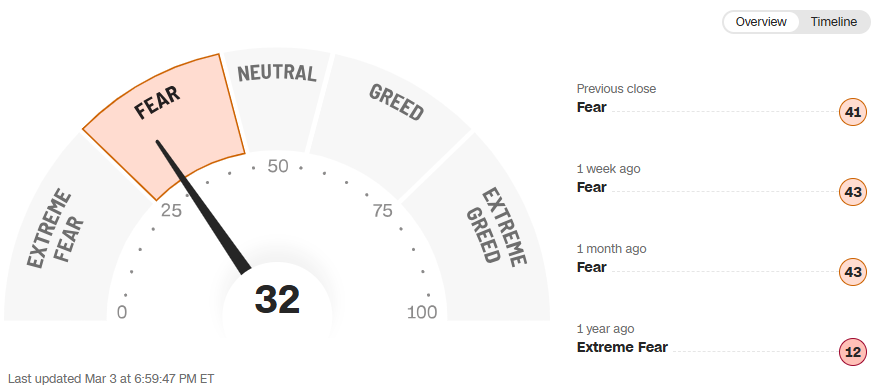
This is a negative reading — and for long-term investors, that’s an opportunity.
The Fear & Greed Index sits at 32, firmly in “Fear” territory. One week ago it was at 43 (neutral). One month ago it was also at 43 (neutral). And one year ago, it sat at a deeply fearful 12 (Extreme Fear).
The speed of this shift from neutral to fear in a single week tells you everything about the intensity of this week’s market shock. The Iran war, surging oil prices, the Nvidia earnings disappointment, the AI doomsday viral post, and the broader macro uncertainty all landed simultaneously — and investors are rattled.
In plain English, investors are scared. They’re buying protective puts, fleeing to safe-haven assets like bonds and gold, avoiding risky positions, and sitting on cash. The VIX has climbed above its 50-day moving average — a signal of heightened short-term volatility. Safe-haven demand is elevated, with bonds outperforming stocks over the past 20 trading days. Junk bond demand is weak, meaning even risk-tolerant investors are pulling back from speculative debt.
But here’s the insight most investors miss. Fear readings historically create the best buying opportunities. Warren Buffett’s most quoted rule applies here directly: “Be fearful when others are greedy, and greedy when others are fearful.” At 32, we’re in fear territory — but we’re nowhere near the extreme fear reading of 12 we saw a year ago. That extreme fear reading was one of the best buying signals of the past year. The investors who stepped in at 12 were rewarded.
We may not hit 12 again — or we might, if the Iran conflict escalates and oil breaks $100. But the current reading of 32 is already flashing a moderate entry signal for disciplined, long-term investors.
The trend is what matters most. We moved from 43 to 32 in one week. If the conflict escalates further, this reading could drop to the 15 to 20 range — a screaming buy signal for the patient investor. Conversely, if the conflict shows signs of resolution this week, the index could bounce back toward 40+ within days, rewarding those who bought in the fear zone.
My advice: Don’t fight the fear. Use it. Add quality positions on red days. Build your buy list before sentiment turns. The investors who built shopping lists during COVID’s near-zero Fear and Greed readings made generational wealth over the next two years. Fear is a feature, not a bug, for the investor with a plan.
👉 For daily insights, follow me on X /Twitter; Instagram Threads; Facebook; or BlueSky, and turn on notifications!
(8) Technical Analysis
Technical levels matter because they’re where millions of traders have programmed their buy and sell orders. When key levels break, algorithms kick in and magnify moves.
1) S&P 500 SPY 0.00%↑
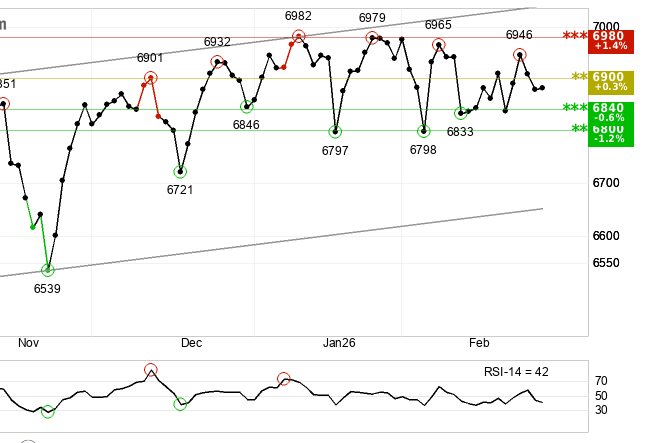
The trend is Positive. The index sits in a rising trend channel. It bounces between support at 6840 and resistance at 6900. Despite scary headlines, buyers continue to step in at lower prices to maintain the structural uptrend.
2) Tech Stocks QQQ 0.00%↑
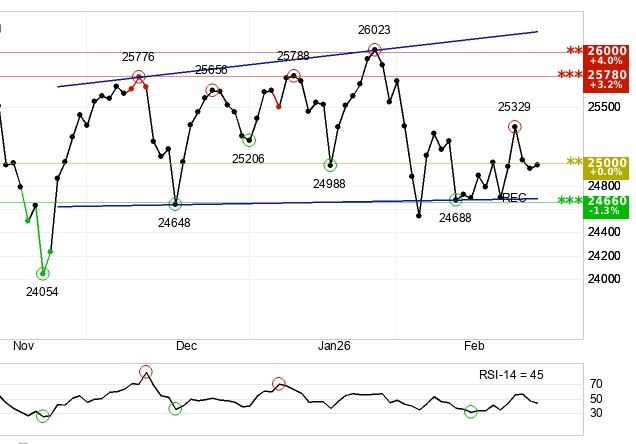
The trend is Negative. The tech heavy index remains stuck in a horizontal channel. It is testing massive resistance at the 25000 mark. The failure to break out higher proves that tech buyers are exhausted.
3) Bitcoin $BTC
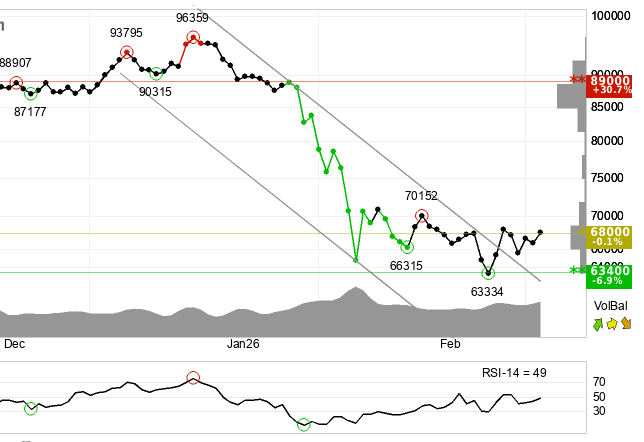
The trend is turning positive. Bitcoin has broken through the ceiling of a falling trend channel, indicating a slower falling rate initially, or the start of more horizontal development.
4) What This All Means
Here’s the pattern: the S&P 500 is holding up relatively well, while the tech-heavy Nasdaq is struggling. This mirrors what we’re seeing in the HALO trade — investors are rotating out of growthy tech stocks and into more stable names.
Bitcoin’s technicals are improving, which is notable given the risk-off environment. When traditional markets panic, Bitcoin sometimes benefits as an alternative asset — but that’s not happening here. Gold is up 2%, but stocks are still the preferred safe haven for now.
This newsletter takes a few hours to research and write so please help us and:
Hit the LIKE button on this post & share this newsletter with friends or family
Become a paid subscriber to support our writing & research! (Get a free 30-day trial with this link) (learn about the benefits here):
(9) Important Lessons & Advice:
Oil is the only variable that matters right now. Not earnings. Not the Fed. Watch Brent crude. Below $90 means markets normalize fast. Above $100 means inflation returns and rate cuts die. Above $120 means a 2022-style shock.
Geopolitical shocks almost never permanently destroy markets. Since 1980, the S&P 500 has typically recovered within weeks of a geopolitical shock. The panic is temporary.
Your portfolio needs an energy allocation right now. The $XLE ETF is up 20.6% YTD while the S&P 500 is flat. A 10-20% energy allocation has historically protected portfolios during geopolitical shocks. If you have zero energy exposure, that's a risk.
Ask the HALO question for every stock you own. "Can AI meaningfully replace this business within 3 years?" If yes, reduce the position. If clearly no, it may be a buy. The HALO trade isn't about dumping all tech — it's about owning businesses that don't disappear in the next disruption.
International stocks deserve real exposure. This is shaping up to be the worst year for U.S. vs. international performance since 1995. Korea is up 44% YTD. Japan is up 14%. Vanguard projects international stocks will outperform U.S. stocks by nearly 2% annually over the next decade. If you're 100% in U.S. stocks, you're leaving money on the table.
👉 For daily insights, follow me on X /Twitter; Instagram Threads; Facebook; or BlueSky, and turn on notifications!
(10) Final Thoughts:
Let me leave you with one thought.
In 1990, Iraq invaded Kuwait. Oil spiked 70%. Markets panicked. The Gulf War began. By the time the ceasefire came three months later, the S&P 500 was higher than before the invasion started.
This week, the market is scared. Oil is high. Headlines are terrifying.
Here’s the great paradox of investing in chaos. The moments that feel the most dangerous are almost always the most profitable — in hindsight. The investors who bought during the Gulf War made money. The investors who bought after 9/11 made money. The investors who bought during the 2008 financial crisis made generational wealth. The investors who bought at the COVID lows in March 2020 saw 100% gains within 18 months.
Every one of those moments felt like the end of the world at the time.
This week’s market shock is real. The Iran war is real. The oil risk is real. The AI disruption is real. The housing freeze is real. But none of these are permanent.
👉 For daily insights, follow me on X /Twitter; Instagram Threads; Facebook; or BlueSky, and turn on notifications!
(11) Questions from Subscribers
Welcome to our Q&A, where I answer the questions you send me!
Q: What does the Iran War mean for regular investors right now?
The most direct impact is through oil prices. When the Strait of Hormuz is disrupted, global oil supply tightens, crude prices rise, and that eventually shows up as higher gas prices and broader inflation. Higher inflation gives the Fed less reason to cut rates — and when rate cut hopes fade, stocks tend to fall. The short-term pain is real. But since 1980, the S&P 500 has typically recovered within weeks of a geopolitical shock. The key variable is how long the conflict lasts. Short and decisive: markets recover fast. Prolonged and escalating: more pain ahead
Q: Why are international stocks doing so much better than the US market?
A few reasons. First, the US market, especially the tech-heavy Nasdaq, was priced for perfection. The AI scare hit it hard. Second, the dollar is weakening, which makes foreign investments more valuable for US investors. Third, many international markets like Korea, Japan, and Brazil are in different parts of their economic cycle, often with cheaper valuations and more room to grow. It's a powerful reminder that the US is not the whole world. Vanguard projects international stocks could return 5-7% annually over the next decade, beating their 4-5% forecast for US stocks.
Q: Is AI still a good investment?
AI itself is still a transformational technology. But the stock prices may be ahead of the reality. Goldman Sachs just said AI contributed “basically zero” to US GDP growth. The spending is massive but benefits foreign chip makers more than American profits. The question isn’t whether AI matters—it’s whether today’s prices reflect a future that’s still 5 to 10 years away.
👋Last Words:
🙌Thank you for reading and joining 108,000 members who trust our newsletter to get smarter and richer! My goal is simple: Make it easy for you to connect the dots on the economy, markets, and investing.
Each newsletter takes a few hours to research & write so please help us and:
Hit the LIKE button❤️ on this post & please share it with friends or family
🙏Become a paid subscriber and support our writing & research (get a free 30-day trial with this link) (and learn about the benefits here):
(fyi, your job can pay for this newsletter with its employee development budget. To make it easy, we’ve created this email template to send to your manager.)
And please let us know what you think of this newsletter:
Missed an issue? Read past issues here at TheFinanceNewsletter.com
☺️ My goal is to help you become richer and smarter with money — Join 3 million and follow me across social media for daily insights:
Instagram Threads: @Fluent.In.Finance
Twitter/ X: @FluentInFinance
Facebook Page: Facebook.com/FluentInFinance
Linkedin: Linkedin.com/in/Lokenauth
Youtube: Youtube.com/FluentInFinance
Instagram: @Fluent.In.Finance
TikTok: @FluentInFinance
Facebook Group: Facebook.com/Groups/FinanceTalk
Reddit Community: r/FluentInFinance
➕Please add this newsletter to your contacts to ensure that none of our emails ever go to spam!
This content is for educational purposes only. Such information should not be construed as legal, tax, investment, financial, or other advice. See for Disclaimer, Terms and Conditions.
For decades NATO has treated the United States as the guarantor of global stability.
But what if the opposite is true?
From Iraq to Libya, from interventions across Latin America to the latest escalation with Iran, Washington has repeatedly destabilized entire regions. At the same time it continues to support Israel despite mounting accusations of grave violations of international law and genocide.
The alliance must confront a simple question:
What if its most powerful member the US has become one of the greatest threats to the very principles NATO claims to defend: peace, human rights, and international law?
https://dedissidenten.substack.com/p/should-nato-expel-the-united-states?r=7c1o64&utm_campaign=post&utm_medium=web&showWelcomeOnShare=true